Silver Age: The Age in the Shadow of Howard & Tolkien
“For the deeds of a man,
Not the words of a prophecy,
are what shape his destiny,”
Lloyd Alexander, The High King
In the beginning there were four great visionaries. Each one more brilliant than their forebears, and of a creative mind that might well have defined a century or era, but for four such to have been born in the same age was a boon beyond comprehension.
Humanity was truly blessed, especially the ‘Anglo-Sphere’ to have had so many great and brilliant men all alive in the same period.
To say that they were unsurpassed is to state the very most obvious of facts. Let it be made clear though that while the next generation of fantasy writers were brilliant, none of them equalled or came close to matching the brilliance of their forebears. Thus it was that we moved from an era of golden, unrivalled literature to a lesser era of far less skill in prose, lesser vision and to an era of lesser creativity.
The writers who came after these men though were not untalented though, not all of them at least. Some were, but not all.
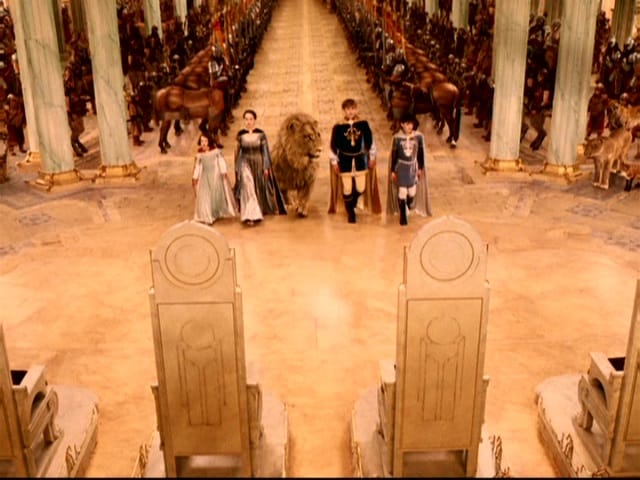
Lewis started off well with his Lion, Witch and the Wardrobe. It was fitting that it should be he who started the Silver Age, with the ‘Chosen One’ type of prophecy that never really featured so blatantly in his predecessors literature but that he managed to make work. He focused his story on four children and their coming of age, in what was a fantastic tale against evil which warns of dystopia and madness in a land that has lost its virtue but hungers to regain it (Narnia).
But the truth is that while the first volume captured lightning in a bottle, the next several volumes while financial successors were poorly written, evidently first drafts and dull stuff barely more readable and enjoyable than chicken scratches if we’re being honest. This in spite of the stellar cast of characters Lewis had invented in the first book.
But while the Silver Age started off uncertainly, Lewis was soon joined by a great many other writers in deciding to tackle the genre. Too many really to count, but most noteworthy amongst them were Lloyd Alexander.
Alexander was someone who had served in World War II, and who had fallen in love in Paris. It was when he was stationed in Wales during the war that he had been introduced though, to Welsh mythology, scenery and historic locations. Though at first he struggled after the war to make ends meet, Alexander was to meet with remarkable and very well deserved success.
While T.H. White who belongs to the Mythic Age and who was writing Arthuriana during this time rather than fantasy (for there is a difference between the two), rather than following in White’s footsteps to directly adapt older mythical tales. Alexander preferred to chart his own course and intermingle his own ideas with the Celtic lore he had learnt.
The first of the stories to be published was in 1964 and was called the Book of Three. The story was a simple one about a youth by the name of Taran, who longs to be a hero and who gets his chance when the prophetic pig he is in charge of, flees into the forest. The story is fanciful and the subsequent stories were to prove no less popular and were to like Narnia before it charm a whole generation of children.
Alexander was to write Prydain throughout the 60s and was to use this to launch a life-long career as a writer. They are his main contribution to the genre, and for this he deserves considerable respect just as Lewis does for one major element. Both of them sought to add a Celtic element to fantasy, putting it front and centre when it was but mere background before in the Conan stories for example.
And speaking of Conan, he made his return in 1950 with the republication of the Hour of the Dragon or as it was redubbed Conan the Conqueror. Next came in 1952 the Sword of Conan then with the ‘The Coming of Conan’ in 1953 the same year also saw King Conan, after it came the ‘Conan the Barbarian’ 1954. ‘Tales of Conan’ in 1955 and ‘Return of Conan’ in 1957 all followed also.
Most of these were highly edited versions of Howard’s stories and thus not of the same quality that he had put out.
The Conan stories were to be published throughout the 60s and 70s, with the next volumes published by Lancer and were to see De Camps partner up with Lin Carter for them. These pastiche novels that they wrote were of varying quality. Some were great, others were barely worth the paper they were printed on, but one thing cannot be denied; Conan had returned and though it was not Robert E Howard’s Conan he loomed large still throughout the Silver Age.
This Conan though not the towering genius of the Howard stories in some volumes, could still be fun though the intelligence as said was dearly missed. Still though, there were moments when he could be discerned.
This run lasted until 1977, and was not without challengers as Karl Edward Wagner, who disliked the changes by Camp and Carter, sought in 77 to restore Howard’s Conan. His attempts only lasted for three volumes.
There was of course Donald Grant who came out with his own editions from 1974 through to 1989, with the series culminating in the 1989 re-release of the Hour of the Dragon, which was properly titled by that selected by Howard, rather than the 1950 name of Conan the Conqueror.
Bantam had its own series one that lasted from ’78 to 82 with Ace Maroto also publishing Conan stories during this time, from 78 to 81.
This wasn’t the only way that Conan dominated the fantasy-sphere; for in 1970 some schmuck from this comic book company you might have heard of, went and begged for the rights to Conan. The stories in question were to prove incredibly popular and was to define Conan for a whole generation of children, with the two runs of Conan one was to go through a whole series of titles but the most notable was Conan the Barbarian, while the other major title was the Savage Sword of Conan. Roy Thomas’s runs of Conan made many valuable contributions to the character and mythology, and have a well-deserved place in fantasy history.
He was to also create during this time the character of Red Sonja, who is the bikini-clad, She Devil with a Sword, now owned by Dynamite Comics. She was also to be written for quite some time by Roy Thomas.
Though not all Conan stories are created equal, the fact that there was so much Conan shows that he did dominate the genre to a large extent. Hardly a perfect series of runs, they were nonetheless though an invaluable contribution to history’s finest genre.
These are the major stories of the time, at least those produced for Conan. There were other great tales, such as the Last Unicorn in 1969, one which Joe holds up in high esteem as the greatest, most philosophical of all Silver Age tales, though it is overshadowed as is a great deal of the Silver Age by two pieces of work that were to taint the whole of this age.
The first that will be referenced is Earthsea, a tale without a plot. A world barren of lore, history and without any decent prose. Mere words on a page with no great meaning, the book and story were written if one could even use that term by Le Guin, whom the less said about the better given her temperament and what she often tended to write on her blog.
But needless to say Le Guin sought to subvert the boys own tale and the notion of the energetic, if impulsive youth who sets off on the adventure only to suffer and learn wisdom, as established by the likes of Lewis, Alexander and others, as they had veered the genre towards following in the footsteps of Arthuriana’s themes of the Hero’s Journey as a ‘boy’s own story’.
The next that must be referenced that worked to subvert the genre was Elric. What Lewis did for the boy’s own journey, the author of Elric Melnibone did for more adult fantasy tales.
Elric’s writer interestingly though is a more complicated man than Le Guin and there is nuance to many of his views, many which have changed and grown over the years so kudos to him. But for one thing Elric was a physically weak individual, who disdained his people’s debauched ways (as they had given into debauchery the more civilised they became) and who relied on drugs.
Naturally you can see why a hippie would love the character, though there is nuance to the argument of civilisation vs barbarism, as there is some Conan influence here. Though given the initial physical weakness, and the coming from civilisation and the drug-binging it is obvious that Elric is a subversion and inversion of Conan.
Does that mean all Elric stories are bad? Well not entirely, though their cultural influence has not been exactly positive, as the inverting of themes and ideas inherent in the genre, would serve to inflict a deadly wound against it so that Elric is well and deservedly forgotten by the larger population. Though if you’re a fan of his, let us know in the comment section, as some of the tales and ideas therein, and many of those of his author are commendable, as few men have done so much to keep Burroughs, Howard and many other writers’ memories alive than he. So he does deserve his place in fantasy history, though his Elric character ought to be scrutinised and read cautiously.
Thus, were the seeds of the downfall of the Silver Age planted in the early 60s, and were to flower and flourish over the course of them and the 70s, encouraged by wastrel hippies, who hungered to rebel against and reject the better stories of Tolkien, Howard, Disney, Dunsany and countless others who provided healthier stories for society at large.
While all this was going on, in rural America there was a creative game-designer with a love of whimsy, fantasy and art and gaming, who was working on a series of model-games, which slowly evolved into a series of supplementary guides that relied more on imagination.
This man, a creative titan in his own right was known as Gargy Gygax. Gygax loved fantasy, and loved imagination, it was he who planted the seeds as far back as 1974 for much of the ideas that would come to rule over the next age of fantasy. He was to write the first Greyhawk adventure module in 1977 after meeting with some success with his creative ideas and gaming ideas in 1974 just before his ‘partner-in-crime’ passed so that the sole owner of their works was Gygax who was however devastated and slowed down by his passing. Yet as said Gygax had soldiered on with impressive resolve and dedication, but Gygax’s influence would be better felt in the next age of fantasy when he would become strangely infamous if briefly so throughout the 80s.
In the meantime, Disney had produced Sleeping Beauty, a visual masterpiece that looks magnificent to look upon, though its story is rather lacklustre compared to other Disney projects. After this the company had dabbled with TH White’s Sword in the Stone, which was an animation wonder and is still rightfully touted as a masterpiece.
There were other Disney works mostly of animals and lesser works, with the next noteworthy picture of a fantasy sort being an anthropomorphic sort in the form of Robin Hood in 1973, a film that has inspired one of Joe’s own works, and which has some of the most finely drawn Disney characters of all times. The film though was not an immense success like Snow White, Cinderella or Sword in the Stone was though.
Disney fell into squalor and difficult times, falling away in the view of Don Bluth from the path laid out by Walt. Once the 9 Old Men were likewise gone the way of their leader, there was only a few left at the company with Walt’s vision, with these animators led by Don Bluth leading an exodus from the studio at the end of the 70s. Don goes into all of this in his great biographical book Somewhere Out There, my Animated Life which you should buy for a full history of animation, fantasy and much more, especially since there are few men who have exerted a greater influence on animation and fantasy literary history than him.
Disney no longer in the game, and with studios producing a few movies mostly of Jason and the Argonauts and Hercules in stunning masterpieces throughout the Silver Age, movies which used Harryhausen’s incredible effects, with his movies culminating in the Clash of the Titans, in 1981. To an extent, it can be argued that this movie was the last real hourrah of the Silver Age, which had begun well with an explosion of writers and artists only to have died with a whimper and increasing squabbling over properties or pay or creative vision.
It is suitable that Harryhausen who was there throughout it all, should give this era its final climax the way he did.
The next age though would be different though. It would begin somewhere around 1980 and 1981, with this era ushering forth even more comics, novels, movies and even stories in a new medium known as ‘video-games’. Ultimately where the Silver Age writers had striven to rebel or to otherwise chart their own course, the Bronze Age for the most part would seek to emulate the Golden, and would strangely rebel against the increasingly dull Silver Age.